How To Create Paystub For Independent Contractors

Dec 13th, 2023

Do you need to generate contractor pay stubs for your business? You have landed on the perfect page. Being an independent contractor, staying on top of the right side of the IRS is vital. Paystubs provide detailed information about your earnings, taxes, and employer-paid benefits.

In this blog, we shall provide a solid insight into independent contractor pay stubs and how to create paystubs for self-employed individuals.

It is challenging to manage your paperwork when you are self-employed. As compared to traditional employees, you generally do not receive a pay stub that showcases your earnings and tax deductions.

How To Get Pay Stubs for a New Apartment?

Knowing How To Read A Pay Stub

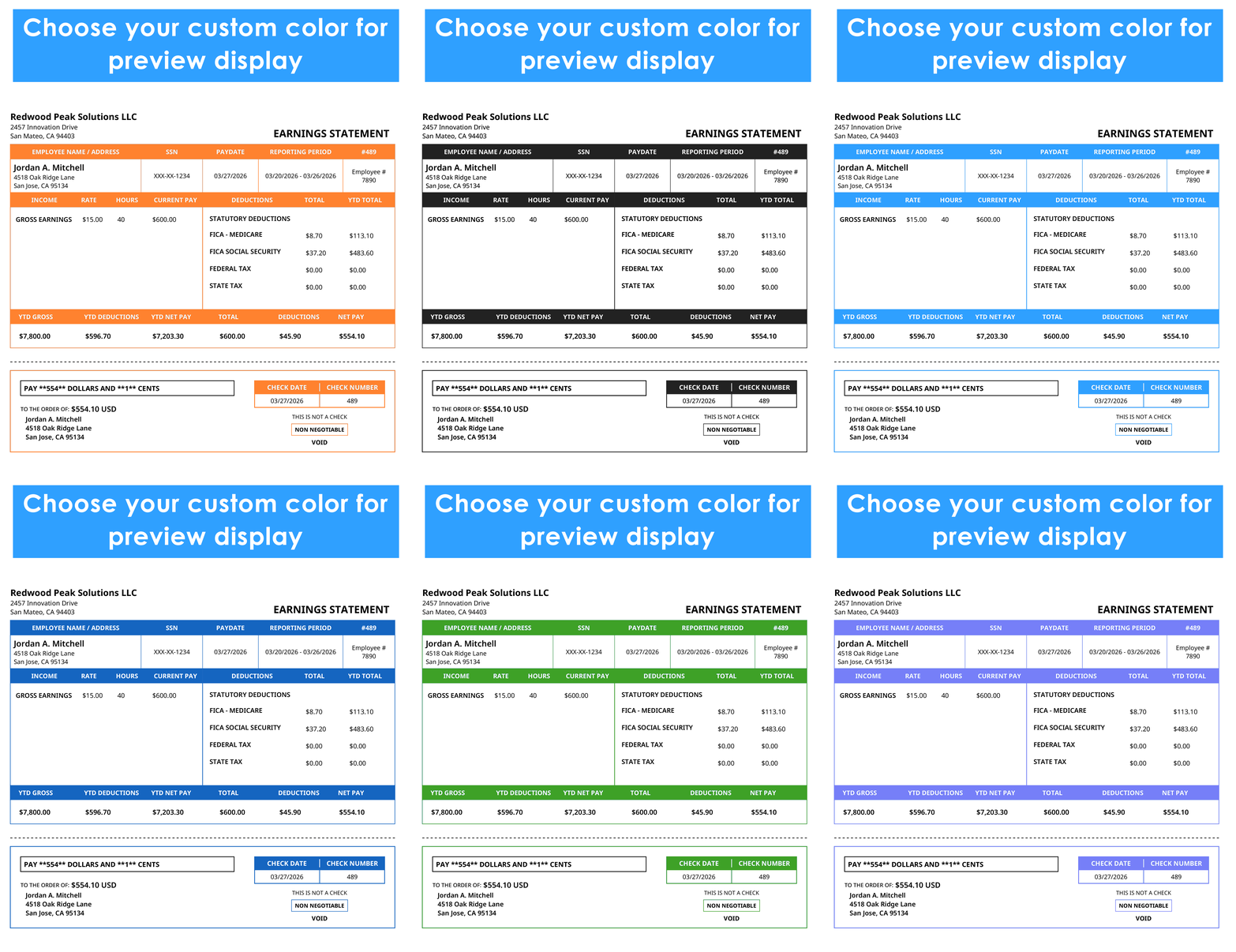
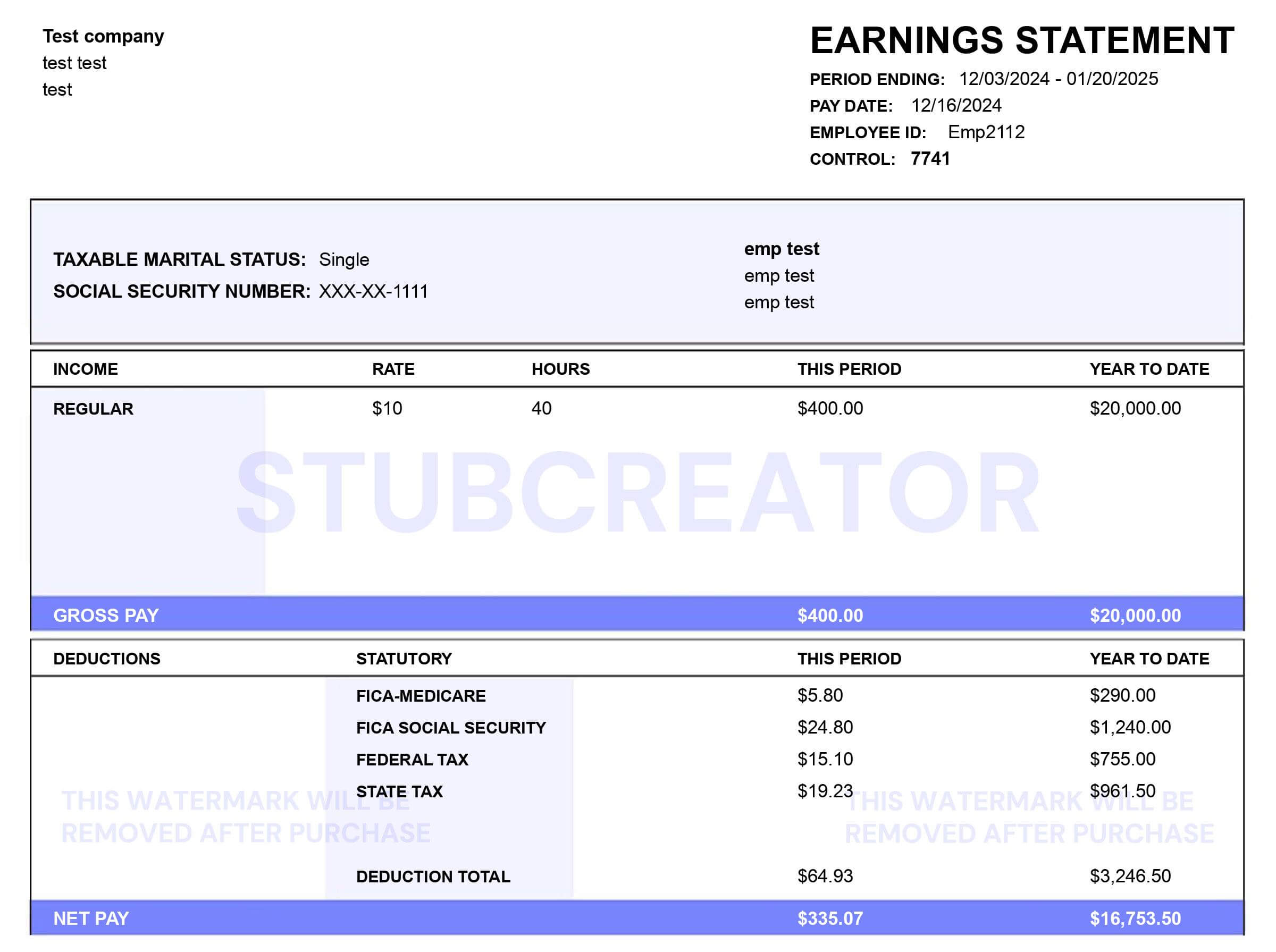
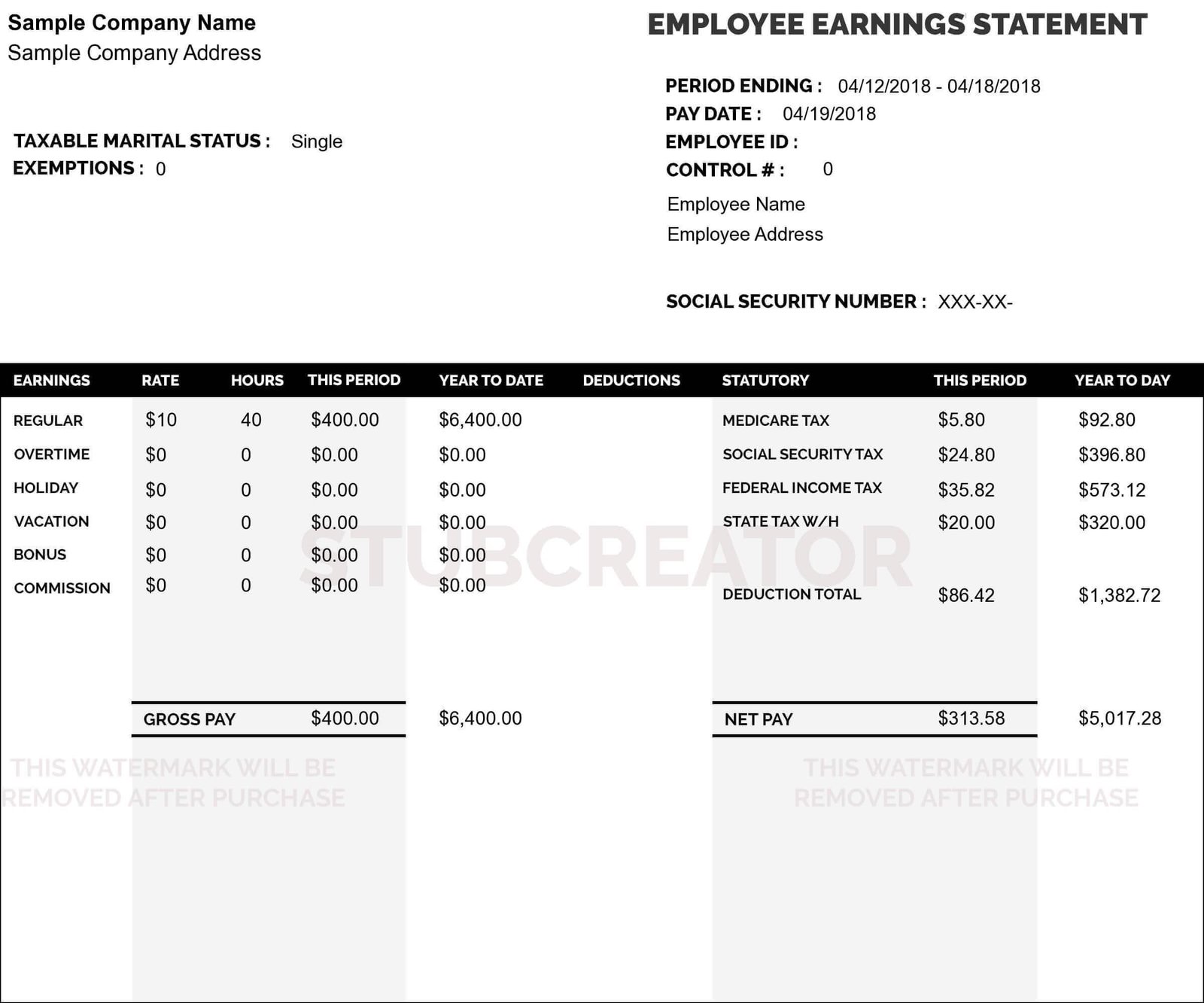
Understanding the difference between current and year-to-date figures is vital while reviewing a paystub. Both are crucial, and the YTD balances assist the firm and the employee determine whether the amounts are accurate.

A pay stub summarizes wages, tax deductions, and benefit deductions. On the other hand, independent contractors’ pay stubs have no deductions from their pay.

States have different laws governing pay stubs. Though some states mandate it, others do not. Employers are required to open up their wage information to employees. Businesses should check laws in each state where they have employees to ensure they are compliant.

As evidence of income, workers should save their current pay stubs. When someone requests a loan, the pay stub verifies their gross income.

How Can You Generate A Paystub and Calculate Wages?

Generating Independent Contractor Pay Stubs

Before we dive into the contractor pay stubs needs, let us discuss how employers typically address pay stubs and all considerations around this. A pay stub is a document that summarizes an employee’s wages and deductions for a given pay period. It can be used for various reasons like payroll tax calculation, reporting to government agencies like the IRS, and employee benefit tracking.

Employers use different methods to generate paystub. Some employers print out paper check stubs for their employees, while others print them out via an online portal, which they can access via an app. The decision to print paper stubs is based on how many employees are being paid each paycheck because it can be costly to print a vast number of copies simultaneously.

25% of U.S. adults report paying late for goods and services in the last 12 months, including 16% who took more than one month to pay their bills. Some might consider this a financial hardship that makes paying bills difficult, including lack of income or medical emergency.

Pay Stub Software/Tool

Many firms use software or tools like eFormscreator to generate paystub for their employee. It can be tempting to download one of these paystubs for your records but beware, it might fail to meet your expectations.

Employers must provide pay stubs in various situations: when employees request them or state law requires it.

The best way to generate a custom pay stub template is to write down everything you want on yours when you get paid- go back through each line and identify which line statements are taxable or non-taxable.

It is vital to know the name of your employer, the number of hours you have worked in the last week, your gross wage earned by you, and any kind of deductions made on your behalf.

How Long Should I Keep Pay Stubs?

Creating A Paystub for Independent Contractor

Since you work for yourself, you do not get a traditional paycheck. That’s okay. You can use a free online application to create your own pay stub.

Keep in mind these steps:

  • Decide your home state.
  • Choose whether the pay stub is for the employee or for you.
  • Insert your personal information.
  • State your company’s information.
  • Finish any remaining field if left.
  • Include any withholdings.

Once you select the template and provide the necessary information, you can download your independent contractor pay stub to generate a quick online payment.

W-2 Form or 1099 Paystub?

Watch out for your documents if you still need clarification. The form the employee receives from their employer is the W2 form. This contains annual compensation and provides information on tax deductions and health insurance. This contains annual compensation and provides information on tax deductions and health insurance.

The appropriate form for independent contractors is a 1099-MISC form. It includes the entire income you earned for the year without any deductions.

Step-By-Step Guide To Filling Out The W2 Form

Conclusion

An independent contractor paystub is vital to the modern tax system and includes in-depth tax data, contract information, and benefits. As an independent contractor, you must stay on top of your payments and pay stub information because they improve the likelihood of a strong, mutually beneficial relationship with the agencies and beyond. If you want to create paystub eFormscreator is the best choice to move forward with!

Pros and Cons Of Cash Jobs In The U.S.

Dec 12th, 2023

Cash jobs are becoming increasingly popular in today’s economy as the cash economy continues to grow. It can benefit cash job seekers if they understand the pros and cons of cash jobs.

A good understanding can help determine whether job seekers are willing to give up benefits like retirement contributions. If you want to generate pay stubs you can use eFormscreator.

This blog will discuss the pros and cons of cash jobs in the U.S.

What are Cash Jobs?

A Cash job is a type of employment where payment is made in cash instead of traditional methods like direct deposit. Employers are not required to report cash payments to the government. This makes cash jobs attractive for those who want to avoid paying taxes on their income.

Cash jobs can be found online via an employer that hires cash-paying employees. Not all companies offer cash-paying positions, but if they do, it is usually at a lower salary than traditional jobs.

When Should Workers Be Paid In Cash?

When you first begin, cash may be your most excellent option for controlling expenditures. It is also an intelligent idea for organizations to hire contractors rather than full-time employees to avoid paying Social Security and Medicare taxes, which might be quickly top-up.

Imagine you choose to pay an employee in cash without withholding any federal taxes. In that scenario, as a business owner, you must submit the IRS form W-11 with your accountant so that the cash payments to the IRS might be recorded.

Related Article: How to Get Pay Stubs from DoorDash

Advantages of Cash Jobs

Job paid in cash can benefit the applicant in various ways. Let us take a look at the advantages of this.

  • Cash Employees Receive Larger Paychecks: Cash jobs can benefit you because they are not taxed. There are no payroll taxes that need to be paid for employers. This means that more money is in your pocket at the end of each pay period.
  • More Flexible Schedule and Provides More Freedom: The job paid in cash is not bound to any specific schedule. This means you can work whenever it is convenient and take time off whenever necessary.
  • Less Formal Process: Cash job applicants are not required to complete formal applications and provide references. This makes cash jobs an excellent option for those who need more time to conduct typical applications and are wary of providing personal information.
  • Get Paid Instantly: Job pay in cash is an individual’s dream come true. Some employers pay employees as soon as they finish their cash job duties. This makes their job more accessible for the employees to access their earnings and use them however they choose.

Disadvantages of Cash Jobs

Though cash jobs have their cup of advantages, they also come with a set of disadvantages.

  • No Benefits: Though the government does not report cash jobs, these employees do not qualify for employer-provided health insurance plans. This information can be found on the employee’s paystub. This means that the workers will need to pay out of their pockets if they want health care and save it on their own to retire on any given day.
  • Less Accountability: Cash-working employees are not required to perform a particular number of hours per week. This means they can apply only full-time or part-time depending on their cash job schedule and availability.
  • No Training Opportunities: Cash employees do not receive formal training from their employer and cannot access resources that can help them develop their skills. Employees who do not participate in training opportunities might need help finding employment elsewhere if they choose to leave their current position.
  • Unable To Save Money With Cash Jobs: Though cash-working employees still need to receive benefits like medical plans, they must pay for these expenses independently. Employees cannot save money for emergencies because their paycheck is used to pay bills and meet other financial opportunities.

Consequences of Cash Jobs

Having cash in your hand after a day’s labor might seem comfortable, but it frequently shows that the firms defrauded both the employee and government.

  • Income Tax Issues: Employees must disclose all their money and pay the proper tax, regardless of how they earn it.
  • Social Security Payments: The employees might not realize it now, but working under the table puts their Social Security retirement benefits in danger. Because the employer does not contribute to the employee’s Social Security or deduct money from their earnings, they do not receive credit for working.

Who Benefits More From Cash Payments? Employee or Employer?

Based upon the discussion above, a firm benefits more from paying employees in cash. Many view their professions as a method of making money and sustaining themselves, obtaining a salary- whatever shape.

As mentioned previously, labor rights are one of the most numbing problem. Because they are on the books at the workplace, they might receive different considerations of labor rights while on cash jobs.

Read more: Understanding DG Paystubs

Conclusion

If you are looking for cash jobs, it is vital to aware of the benefits and drawbacks of this type of employment. If you are looking for paystubs generator then you should see eFormscreator which is a free to use tool.

Guide To Fill Out A 1099-MISC Forms

Dec 11th, 2023

A Form 1099-MISC contains several typical fields in which the payer only inserts information relevant to a recipient’s situation. In order to generate a 1099 form creator, you can use eFormscreator which is 100% true.

This blog will teach you how to fill out a 1099 misc forms. Let’s get started.

Below is a quick overview of the information you must enter in the boxes. You should consult the IRS’s instructions for filing the 1099-MISC form for detailed information.

Payer and Receipent’s Information: The IRS provides a large field in the upper right-hand corner of the 1099-MISC forms for the payer to enter their full name, address, town, state, zip code, or foreign postal code, and telephone number.

A Comprehensive Guide to Filing Your 1099-MISC Form Online

Directly beneath the field are two side-by-side boxes, one for the payer’s federal tax identification number (TIN) and other for the recipient’s. The TIN might be a social security number.

The following three fields on the right-hand side are where you enter the recipient’s information: Their full name, street address, city, state, country, and zip code.

Account Information: Beneath the recipient’s information is a field labeled Account Information. The payer only enters information in this field if they are issuing multiple 1099-MISC forms to a single recipient.

FATCA Filing Requirement: The Foreign Account Tax Compliance Act (FATCA) mandates that the participating foreign financial institutions report the financial earnings of U.S. account holders. Payers who check this box are generally U.S. citizens reporting interest earned from a foreign bank.

2nd TIN Not: You must check this box if the IRS notified you twice that the recipient’s TIN was incorrect.

Box 1: Rents: In this field, your reports of rents from real estate are listed on either Schedule E or Schedule C of your tax form.

Box 2: Royalties: Box 2 is where you would report payments of royalties for oil, gas, mineral properties, copyrights that appear on Schedule E.

Box 3: Other Income: You use Box 3 to report the other income from Form 1040. The Prize money and trade income you reported on Schedule C will also be listed here.

Box 4: Federal Income Tax Withheld: This field is for recording backup withholdings on Indian gaming profits.

Box 5: Fishing Boat Proceeds: You insert the money received from self-employed fishing boat operators here.

How to Calculate Tax on 1099-MISC Income

Box 6: Medical and Health Care Payments: Enter the medical and health care payments you reported on Schedule C.

Box 7: Non-employee Compensation: The most commonly used box is where you report the amount of money you paid to independent contractors working in a given tax year.

Box 8: Substitute Payments in Lieu of Dividends: Substitute payments in lieu of dividends typically occur when a broker lends out your stock to short-sellers. If the stock declines due to the gambit, you will earn revenue that you must report in this box.

Box 9: Payer Made Direct Sales of $5,000: This is simply a check box indicating whether the payer made more than $5,000 in direct sales.

Box 10: Crop Insurance Proceeds: The amount goes into this field if you receive revenue from crop insurance.

Box 11 and 12: While they appear on the form, they are currently void, and you should not report any information here.

Box 13: Excess Golden Parachute Payments: This figure will also appear on your 1040 form.

Box 14: Gross Proceeds Paid To An Attorney: If you consulted an attorney for business purposes in a given tax year, that amount must be recorded here.

Box 15 a and 15b: Section 409A Deferrals and Income: Companies sometimes elect to pay employees and principals via non-qualified deferred compensation. Box 15a reports the amount of deferred pay, and Box 15b reports the current year’s income.

Creating pay stubs If You’re Self-Employed

Box 16: State Tax Withheld: This is where you report state taxes withheld from your income. If you worked in more than one state, you must also enter information for the other state.

Box 17: Payer’s State No: Record the official state(s) number here.

Box 18: State Income: Report income you received from each of the states where you worked in this box.

Conclusion

Now, you have all the resources to complete a 1099-MISC Form 2023. And, if you want to generate a 1099-MISC Form Online, you can use eFormscreator, which is free.

How To Get Pay Stubs for a New Apartment?

Dec 08th, 2023

If you are looking for a new apartment to rent, you will likely be required to show proof of income to your landlord. You can demonstrate this proof of income in various ways, the most common being a paystub.

If you want to generate paystub for yourself or your employees, use eFormscreator , the user-friendly tool. In this blog, we will make you understand how to make pay stubs for apartment. Besides this, you will also learn about the options you have to prove your income before you sign a lease. Let’s get started.

Why Use Paystubs as A Proof of Income?

Landlords generally want to see that your rent shall be at most 30% of your monthly income, so they ask you for proof of your income.

Pay stubs are the most basic method that renters shall show as proof of income to the landlords, as they are the most trustworthy method. A Pay stub proves your income and showcases how much earnings you are making.

Pay stubs and other verification forms show the applicant’s full name, employer’s name, and relevant contact information. They are usually the most up-to-date form concerning income that many employed people have.

How Long Should I Keep Pay Stubs?

How To Get Pay Stubs For A New Apartment?

Most renters can access their pay stubs, so it’s a flashy way to verify your income. If you have a direct deposit, you will likely have access to your pay stub online; otherwise, you can ask HR for a copy of the same. If you want a physical copy, ensure that you only present your landlord with a copy, not the original.

Renters should expect to provide you with two months worth of pay stubs. Presenting pay stubs for this period shows the landlord how frequently you are paid and how much you make per month.

If you are a freelancer or an independent contractor, you might not have a pay stub to present to the landlord—no need to panic. Depending upon your landlord’s request, you might have other options left to show proof of your income.

Other Options for Proof Of Income

1. Bank Statements:

Self-employed people do not receive a traditional pay stub and might not receive pay at regular intervals.

Providing bank statements from at least the past two months is an excellent way to show landlords that they have a regular income. Be aware that the landlords might also request more than two months’ worth of bank statements to show proof of income and steady income.

Bank Statements give landlords an idea of the applicant’s overall financial position and help them understand if the applicant can afford the rent.

Other alternative for a self-employed individual is to provide a 1099 form. It is a tax document; it is easily verified. However, you might need to offer more than one 1099 form to prove a stable income.

How to Fill Out Form W2 Form

2. W-2 Income Forms:

W-2 forms are reliable documents that provide the applicant’s income from the previous year. However, many of the landlords prefer W-2 forms as supplemental to pay stubs.

A W-2 might only sometimes be sufficient as proof of income as they do not give an up-to-date view of the renter’s income. A renter might have changed jobs in the past year, which the W-2 would not reflect. If you submit a W-2 form, your landlord might also request recent pay stubs.

3. Letter of Employment:

A landlord might request a letter of employment to confirm your employment status.

Some companies generate generic letters to detail your length of employment and salary. You might approach your manager for a formal, more personal letter, providing that landlord with proof of your character and serving as a positive reference.

Likewise, employment letters are easily forged, so be aware that the landlords might call our employer to verify the letter. Moreover, letters of employment take longer to obtain the other forms of proof of income, as your employer may need to create a new one.

Pay Stubs For A New Apartment

Having proof of income as a renter is vital to give your landlord peace of mind that you can make your monthly rent payments on time. As a renter, you have several options for proving your income and pay stubs are the most basic and reliable form.

However, pay stubs are not enough, so it is best to have multiple methods and documents prepared. Your landlord may request a secondary method to prove your income before accepting you as a tenant, so you should stay aware of the different ways that you can show proof of income to potential landlords.

How Can You Generate A Paystub and Calculate Wages?

Conclusion

Landlords can always ask the renter to show at least one document as a proof of income. To create a pay stub, you should use eFormscreator to save time and ensure the proper documents are ready.

Guide To Paystub Abbreviations

Dec 07th, 2023

Congratulations on receiving your monthly paycheck. Now you are stuck wondering what all of the abbreviations mean.

We have curated this blog for you to help you make sense of standard paystub abbreviations and what they mean for your monthly income and deductions. If you want a free-to-use paystubs generator, then you should check out eFormscreator.

Why Do I Need To Understand My Paycheck Stub Abbreviations?

There are several reasons why understanding the abbreviations on your pay stub is critical. In this section given below, you will be looking at some of the most important ones.

Understand Your Tax Deductions: Common pay stub deduction codes showcase taxes and contributions to different insurance programs. Understanding the abbreviations on your pay stub will help you figure out how these deductions affect your monthly earnings.

Check For Errors and Distortion: It is not uncommon for employers and payroll systems to accidentally withhold the incorrect amounts from pay stubs.

You will only be able to notice these irregularities if you understand what the abbreviations on your pay stub mean.

Errors include:

  • Amount of taxes paid
  • Unpaid Overtime
  • Inaccurate benefit

Understanding Your Pay Stub: All About YTD

Use Pay Stubs as a Proof Of Income

Pay Stubs are one of the most common ways to introduce proof of income:

  • Get a credit card
  • Apply for a loan
  • Get approval for a lease

When you know what the abbreviations mean, you can understand how they distribute your income.

Guide To Pay Stubs Abbreviations

Standard Pay Stubs Abbreviations:

Gross Pay: This is your full salary pre-tax deductions.
Net Pay: This is the salary which you will take home after all the deductions have been subtracted.
Federal Tax Amount: This is the amount that you will need to pay to the Internal Revenue Service each month.
State Income Tax: This is state-specific as not all the states have income-related taxes. State taxes are calculated via a percentage based on your income after deductions.

These taxes make up the state budget and are used to fund:

  • Healthcare
  • Garbage Collection
  • Infrastructure

Local Tax

This is the amount of tax you will pay to your local government. It is a requirement for some cities, countries and school districts.

Local Tax help fund Public Services like:

  • Police and Fire Departments
  • Libraries
  • Road Maintenance

How Long Should I Keep Pay Stubs?

Social Security

Social Security is a system of retirement, disability and other support programs set up by the U.S. government.

It acts as a form of financial insurance if something happens to you that results in you being unable to work.

Federal Law requires working Americans to contribute a portion of their wages to the Social Security Program every month.

Medicare

Medicare is a U.S. government program that provides medical benefits to Americans aged 65 and older. These include hospital and surgical benefits.

The law requires working Americans to contribute at least 1.45% of their gross income to the Medicare program.

Year-To-Date (YTD)

You can break YTD into two sections to showcase the employee’s total income and contributions during the year.. This includes:

YTD Gross: This is the total income that the employee has earned during the year before any deductions are made.
YTD Net: This is the total amount paid to the employee after their deductions. Employees need to ensure that their deductions are accurate.

Header Abbreviations and Codes

Social Security Number (SSN): This is the government-issued number which is used to report your wages to the IRS. You can also use your SSN to track your eligibility for Social Security benefits.
Check Number: Employers use this number to identify and track each paycheck for their company’s accounting records.
Employer Identification Number (EIN): The EIN is a number assigned to the business by the U.S. government and IRS. It also helps the IRS to identify the returns and employers.

How Can You Generate A Paystub and Calculate Wages?

Earnings Abbreviations

Let us take a closer look at some of the typical earnings abbreviations below:

Gross Pay: This is your total salary before deductions are cleared.
Net Pay: This amount showcases what you will take home after taxes and other deductions.
HR: Its full form is Hourly Rate. The law requires Your employer to pay their workers hourly wages, which is shown on the pay stub.
OT: Its full form is Overtime Pay. This showcases that the work is past an employee’s regular working hours.
Add Earnings: This section showcases additional earnings. It is used to report any income received over their regular salary.

Conclusion

In this blog, we have cleared all of your paystub abbreviations, and now you do not need to panic by seeing that jargon on your pay stub. If you want to create a paystub, use eFormscreator to be intact with a professional paystub.

How Can You Generate A Paystub and Calculate Wages?

Dec 06th, 2023

Managing a payroll process is complex, you need to generate accurate payroll data for your employees. Each worker needs to have a detailed paystub, to understand gross wages, and all the withholdings from the pay. If you are looking for free paystubs, eFormscreator will help you.

What is a Pay Stub?

A Pay Stub lists all vital information related to the employee’s pay. When you review a pay stub, it is vital to note the difference between the current pay period and year-to-date amounts. Both of them are crucial, as YTD balance helps the employer and the worker understand if the amount is correct.

The paystub provides information about wages, tax withholdings, and benefit withholdings.

The rules regarding pay stubs vary from state to state. Some states require employers to provide pay information to the workers, while other states do not require it. Businesses should confirm these requirements in every state where they employ workers.

Employees should keep their most current pay stubs as proof of income. If an individual applies for a loan, the pay stub confirms that it is the borrower’s gross income. Employers should keep pay stubs on file if they are already generated.

The pay stub information should match the data on every employee’s W2 form, which shall be used to file their tax returns. To create paystub, the first step is to have every employee complete their Form W-4.

Read the Related Article How Long Should I Keep Pay Stubs?

How Does A Paystub Works?

Let us explore sections of a pay stub:

Earnings:

Gross Earnings: This displays an employee’s whole earnings before any deductions. It encompasses regular pay, overtime pay, bonuses, commissions, and other additional income sources.
Hours Worked: This outlines, the times worked the corresponding pay rates, and the earnings for different categories like regular hours and overtime.

Deductions:

Federal Income Tax: This showcases the amount withheld for federal income tax.
State Income Tax: If applicable, state income tax is enumerated separately.
Other Deductions: Health Insurance Premiums, Retirement Plan Contributions, and other benefits.

Net Pay:

Net pay is commonly known as Take-Home Pay. This is the section of the paystub that represents the ultimate amount that the employee will receive after all the deductions have been deducted from their gross earnings.

Read Article: What is the Difference Between W9 and W4?

Form W-4 it’s Working Process

The Employee’s Withholding Allowance Certificate (Form W-4) is a form that the federal government requires employers to fill out when they are new at the job. Information submitted on the form lets the employer know how much salary to withhold from a paycheck for tax purposes.

Remember the following:

  • As an employer, you should keep an employee’s most recent W-4 form in his or her payroll file.
  • You also need to ensure that you add the correct number of allowances into your payroll processing system.

The W-4 collects the worker’s general information like name, address, and filing status and guides employees who have multiple jobs. There are extra resources provided to calculate the withholdings for these situations.

Information Needed To Create Paystub

Resolve the following for each employee:

  • Payroll Cycle: The number of pay periods determines how much salary is paid on each payroll date. It determines the starting and ending days for computing an hourly payroll.
  • Wages: Net pay and Gross pay. Wages might be based on a salary or calculated using an hourly rate.
  • Tax Withholding: State, Federal, and Local amounts withheld for taxes.
  • Benefit Withholding: Amounts withheld for the employee’s share of insurance premiums.

Calculating Net Pay:

For example, John’s annual income is $60,000, and your firm processes payroll 26 times a year. Sally’s gross pay each pay period total ($60,000 / 26) per pay period.

Based upon the allowances on his W-4, the firm should withhold 20% of her gross pay for federal taxes and 5% for state taxes. John also pays $50 each pay period for her share of the company health insurance plan.

John’s net pay is $2,038 less a total of $577 for taxes and $50 for his health insurance premiums. His net pay is $1,681.

A Pay Stub must include all of this information for the current payroll period and year-to-date. The pay stub you generate might also include unemployment tax payments. Hourly workers need details on their total hours worked, and any hours that are paid as overtime wages.

Read Full article: Creating pay stubs If You’re Self-Employed

Why are Pay Stubs Crucial?

Creating pay stubs is a vital part of processing payroll because that serves as a receipt of payment for employers. They verify that the taxes are withheld as and when required for a given pay period, as were employee deductions for health benefits and retirement plan contributions.

Conclusion

Now you know how to create paystub and in case you want to know more about it and want to get a real hands-on experience with paycheck stub generator free then you should checkout eFormscreator.

What is the Difference Between W9 and W4?

Dec 05th, 2023

There are over 800 different Internal Revenue Service (IRS) tax documents in the United States. At the end of the tax year, you must understand which of the forms apply to you and how to fill them out in a correct manner. If you want a free online w9 form generator, eFormscreator can quickly generate it for you.

The two most common tax document forms are Form W-9 and W-4. Due to its similarities, these are the forms that people get confused about the most.

In this blog, we shall outline the difference between w4 and w9 and know more about them.

Recap of the Internal Revenue Service (IRS)

The Internal Revenue Service (IRS) is a U.S. government agency responsible for the collection of federal taxes and the enforcement of tax laws.

It was established in 1862 by President Abraham Lincoln and operated under the authority of the U.S. Department of Treasury. The main motive of the IRS is to collect individual income and employment taxes as well as corporate, excise and estate taxes.

What is a W9 Form?

A W9 form is commonly known as the Request for Taxpayer Identification Number (TIN) and Certification.

This is a one-page tax form that employers use to get the TIN from self-employed individuals and independent contractors.

What is NDAs and Why is it Important?

Who is Qualified To Be An Independent Contractor?

An Independent Contractor is defined as the following:

  • Workers who have the bulk of control over when and how they complete the tasks.
  • Those who do not receive health insurance, 401(k) matching and other benefits.
  • Individuals who pay all their taxes on their own.

Some of the common examples of independent contractors include graphic designers, writers and repair persons.

One of the highlighting factors of an independent contractors is that they receive non-employee compensation from the companies for whom they work.

Examples of non-employee compensation include fees, commissions, and awards for service finished.

A W-9 form also provides other personal information to employers, like the independent contractor’s full name and address.

Unlike other tax forms, a W-9 form is not filed with the IRS. It is submitted to the independent contractor’s supervisor.

As the end of the tax year arrives, independent contractors must submit a Form W-9 to the companies they worked for so that they can get a 1099-MISC form in return.

Form W-9 and Tax Implications

The Form W-9 acts as an agreement that independent contractors are responsible for withholding taxes from their income. Full-time employee have their federal income taxes, Medicare and Social Security taxes withheld from their paychecks by their employers.

What Do Independent Contractors Include on a Form W-9?

An Independent Contractor includes the following on a form w-9:

  • The name of the payee.
  • The payee’s federal tax collection. This can be a single-member limited liability company (LLC), S corporation or C corporation.
  • The payee’s current, complete mailing address.
  • The payee’s taxpayer identification number (TIN), which includes either an Employer Identification Number (EIN).

What is a W-4 Form?

W-4 Form, also known as the Employee’s Withholding Allowance Certificate, is a federal form that employees must complete when starting a new job.

Employers use a Form W-4 to determine how much income tax to withhold from their employee’s paychecks.

The amount of income tax withheld from the employee will be based on their wages and the number of withholding allowances they qualify for.

Withholding allowances are based on the employee’s filing status, how many dependents they have, and their foreseen tax credits and deductions.

It is of vital importance that employers ensure that the information on each of their employee’s Form W-4 is correct.

If the incorrect amount is withheld from the employee’s paycheck, they can face expensive penalties from the IRS.

Tax Savings with the W4 Form Online

What Do The Employees Include on a W-4 Form?

  • Full name, postal address and zip code.
  • Social Security Number
  • Martial Status
  • How many dependents do they have
  • Any additional money that the employer should withhold.

W9 vs W4

Now you have a good idea about what W-9 and W-4 forms are, let us take a closer look at their differences and what their indications are for the taxpayers.

Difference Between W9 and W4:

Form W-9 Form W-4
Independent contractor fill out a Form W-9 Employees fill out the Form W-4
Self-employed workers use the Form W-9 to provide their taxpayers identification number to companies they have worked for Employee use W-4 form to infrom their employers of how much income tax to withhold from their paycheck
W-9 forms submission deadline is 31st January W-4 forms submission deadline is first month of starting a new job
Businesses send a blank W-9 form before independent contractors start working for them Generally, employers should issue their employers with a W-4 Form on their very first day
Independent Contractors can file a Form W-9 annually Employees need to file a new Form W-4 every time when they start a new job

The main difference between the W9 and W4 Form is that a formal employee fills out a W-4 Form, whereas a self-employed worker fills out a W-9 Form.

It is vital to remember that a W-9 Form is nothing but an Information Return that provides business with an independent contractor’s details and isn’t submitted to the IRS.

In comparison to the W-4 Form, it is to be filled out by the full-time employees.

Employees must fill out a new W-4 form whenever their financial situation changes. In addition to this, when an employee starts a new job, this can include a change in marital status, having a child, or a raise in wages.

All this information is relevant to an employer because it can indicate a change in the employee’s payroll at the end of the year.

Do I Have To Fill Out Both W-9 and W-4 Forms?

Self-employed workers do not always have to fill out a Form W-9. Moreover, many businesses ask independent contractors to finish the one to avoid any costly penalty from the IRS.

If an independent contractor refuses to complete a Form W-9, the firm can withhold a certain percentage from their wages.

This process is known as backup withholding and can mean that the employer withholds 28% of your pay and submits it to the IRS.

Conclusion

Yes, we know that the ultimate process of generating and filing out an IRS Form can be stressful and time-consuming. That’s why our free online w9 form generator and printable w4 form generator by eFormscreator.

How Long Should I Keep Pay Stubs?

Nov 28th, 2023

If you’re an employee, employer or independent contractor, there are various reasons as to how long to keep pay stubs.

Not only does a pay stub help you streamline the tax filing procedure, but it also helps avoid legal trouble in the event of an audit.

Individuals can use pay stubs to get a loan, open bank accounts, and ensure that their deductibles are appropriate.

This blog will outline everything you need to know about how long you should keep a pay stub and why you should do so.

What is a Pay Stub?

A Pay Stub is a document that shows an employee’s earnings and total deductions during a particular pay period. These documents indicate how much income tax, social security contributions and other benefits are deducted from an employee’s salary.

A Pay Stub contains the following information:

  • Personal Details including postal address, full name and Social Security Number.
  • Employer’s Address.
  • Number of hours worked.
  • Gross pay before deductions.
  • Any taxable deduction and benefit.
  • Net income after deductions.

Free Paystub Generators: Everything You Need to Know

How Long To Keep Pay Stubs and Do Employers Have To Provide Pay Stubs?

The Fair Labor Standards Act (FLSA) states that employers should keep a record of the following:

  • Each employee’s personal information, including their full name and address.
  • Any information relating to an employee’s compensation. This includes worked hours, hourly rates, overtime and deductions.

Although employers are required to record employees’ compensation, they aren’t necessarily required to provide them with digital or paper pay stubs.

States where employers are required to issue pay stubs are:

  • Alaska
  • Arizona
  • Idaho
  • Illinois
  • Indiana
  • Kansas
  • Kentucky
  • Maryland
  • Michigan
  • Missouri
  • Montana
  • Nebraska
  • Nevada
  • New Hampshire
  • New York
  • New Jersey
  • North Dakota
  • Oklahoma
  • Pennsylvania
  • Rhode Island
  • South Carolina
  • Utah
  • Virginia
  • West Virginia
  • Wisconsin
  • Wyoming

States Where Employers Are Required To Issue Pay Stubs:

  • Alabama
  • Arkansas
  • Floria
  • Georgia
  • Louisiana
  • Mississippi
  • Ohio
  • South Dakota
  • Tennessee

While some states do not require pay stubs to be issued to employees, formal institutions like banks need them as proof of income.

This means that the employees need to create their pay stubs. In this case, employees can use their contracts to know how much they earn.

Paystub Deduction Codes

How Do You Get Pay Stubs as an Independent Contractor?

Independent Contractors are self-employed individuals who provide services to different clients and firms.

Examples of Independent Contractors are writers, painters and graphic designers.

Why Should I Keep Old Pay Stubs?

Employees, employers and independent contractors must keep their old pay stubs for various reasons. Let’s see what those reasons are:

Employers: Business owners must accurately record their employee’s information, including compensation-related details. If a business has financial statements like pay stubs in hand, they might find themselves on the right side of the law, leading to an investigation.

For example, an employee has filed a complaint against their employer about their salary. An employer can use pay stub records while filing an employee’s income tax returns.

Employees and Independent Contractors:

No law requires employees or independent contractors to monitor their earnings and deductions.

It helps to ensure you are paid adequately: When you receive your pay stubs, you can check and monitor your earnings and deductions.

This ensures that the right taxable deductions are subtracted from your wages and that you are being paid in an orderly fashion as per your employment agreement.

You can use Pay Stubs as Proof of Income: Many formal institutions need proof that you have a stable income before you can use their financial services. For example, banks will only allow you to take out a loan with proof of income. You can use pay stubs as proof of income, though you will be able to repay debts.

Paystubs make Tax Filing Easier: You need to use your pay stubs to calculate wages and deductions on your W-2 when you file your taxes. Your annual income will dictate how much tax you must pay, your health and other insurance premiums, and the Social Security benefits you are eligible for.

How Long Should I Keep Pay Stubs?

Employers:

Record-keeping requirements differ from state-to-state. Generally, employers are encouraged to keep their financial records for at least three years.

Employees and Independent Contractors:

It is recommended that you should keep your pay stubs for at least 12 months. You shall need your pay stubs to accurately file your W-2 forms and Social Security contributors to ensure you are paying the correct amount of tax on time.

Self-Employed? Here’s How To Show Proof Of Employment

What are Some of the Best Ways To Store A Pay Stub?

Trying to store and organize the physical copies of your pay stubs for several years can be hectic. Not only does this take up a lot of space, but it will be frustrating to search for the documents if everything needs to be properly organized.

Using the cloud-based digital solutions where you can easily store your documents online makes this manageable. You can scan and upload the physical pay stub copies to your computer to keep digital records.

Conclusion

The basic deadline for the question How Long Should I Keep Pay Stubs is 12 months. In case you are looking for an easy and affordable tool to create paystub online free, eFormscreator is your one-stop shop. The user-friendly tool is fully automated, allowing you to create pay stubs quickly.

What is NDAs and Why is it Important?

Nov 23rd, 2023

A Non-Disclosure Agreement is a vital legal framework that is used to protect sensitive and confidential information from being made available by the recipient of that information.

What is a Non-Disclosure Agreement (NDA)?

To maintain an advantageous benefit, businesses should keep working on new projects; unique ideas let them fall into the competitor category.

So, startups with new and profitable ideas can only succeed if their work remains under the mat. A Non-Disclosure Agreement (NDA) is a legal document that keeps the lid on sensitive information.

These agreements are called confidentiality agreements (CA), confidentiality statements within a more significant legal document.

How Non-Disclosure Agreements (NDAs) Work?

NDA is used when confidential information is disclosed in front of potential investors, creditors, employees, advisors, or suppliers- or any other stakeholders who need access to the firm’s personal information.

Having confidentiality in writing and signed off by all parties can gain trust in those sorts of negotiations and deter intellectual property theft.

The confidential information’s exact nature will be in the non-disclosure agreement.

The confidential information’s exact nature will be in the non-disclosure agreement. Some NDAs shall bind a person to secrecy for a loopable period so that at no point in the future will the signer reveal the confidential information contained in the agreement.

The penalties for breaking an NDA are enumerated in the agreement and might include damages in lost profits and business opportunities.

Uses of NDA

Business Owners need to discuss sensitive information with outside entities. Sharing information is vital when seeking investments, finding potential players in the business venture, and obtaining new clients.

To protect the people with whom this information is shared, non-disclosure agreements have been an extended framework of maintaining trust.

As well as preventing vital information from leaking, where it could undermine the profitability inherent to the old content.

The information which might require NDA includes secret sauce, formulas and manufacturing process.

Protected information generally includes client or sales contact lists, non-public accounting figures or any other significant item that sets one firm apart.

For example, a startup firm seeking to raise money from venture capitalists might fear their good idea being stolen before receiving an investment.

Having a signed NDA helps in avert such types of theft ideas.

A company hiring outside the consultants might also require those individuals handling sensitive data to sign an NDA so that they do not disclose the agreements at any point.

A full-time employee might also require those individuals handling sensitive data to sign an NDA so that they do not disclose those details at any point.

What’s Not Included in an NDA?

Not all of the business’s dealing is to be kept confidential. The NDA does not cover public records like information filed with the SEC.

The court is free to move the scope of the NDA depending on the agreement’s language.

For example, if one party to the contract can prove that they have skill covered in the NDA before its signing or they can prove that they can acquire the knowledge outside the agreement boundaries, which may be able to avoid an adverse judgement.

Types of NDAs

The primary content of NDA is unique as it is defined to be specific information, proprietary data, or other sensitive data determined by the people involved and what is discussed.

A one-sided agreement is a contract which stipulates one party to another, generally not to reveal confidential information that they learn on the job. The majority of the non-disclosure agreement falls under this category.

Contract and corporate researchers in the private sector and professors at research universities are often required to sign NDAs, which give the rights to any research they conduct with the business that supports them.

On the other hand, a mutual non-disclosure agreement is typically executed between businesses engaged in a joint venture, which involves sharing proprietary information.

What are Some of the Key Elements of a Non-Disclosure Agreement?

All of the parties involved should be detailed in a non-disclosure agreement. An NDA should include a description of confidential information, the requirements and obligations of parties, any exclusions to the confidential agreements, terms or length of the agreement, and the consequences of a breach.

Conclusion

With a Non-Disclosure Agreement generator, you can quickly generate this agreement for free without hassle.

Paystub Deduction Codes

Nov 10th, 2023

To correct payroll, you need the right information, including the data required to create paystub. A pay stub lists all the valuable information about an employee’s pay.

A Deduction Code identifies types of deduction codes, like significant medical, health benefits, credit union payments, charitable contributions, etc.

Employers and workers must understand the information on a pay stub. Employers must generate authentic pay stubs that match the gross pay, tax withholdings, and other payroll amounts.

This blog explains the information required to create a paystub and view the most common paystub deduction codes.

What is a Pay Stub?

In most cases, a pay stub is being provided to the employees. It includes essential information about an employee’s payment, such as wages earned for a pay period, essential deductions, and the amount of money an employee takes home.

This information can fluctuate depending on your state, though many states require you to give pay stubs to your employees. You should keep a copy of each pay stub for your payroll record.

Why are Pay Stubs Crucial?

The employees and employer can use pay stubs to record previous wages, but they can also make sure that the payments are accurate.

By viewing how their payment is broken down, employees can understand their tax deductions and know how much of their tax is going where.

If there is no equality between you and your employer, you can use the pay stubs to prove they were paid equally. Employees can use the pay stub to help them complete their W-2 forms when completing taxes.

create-paystub

Information Needed To Create Paystub:

Regulate the information for each employee:

Payroll Cycle: The payroll Cycle is defined as the number of pay periods that determine how much salary is paid on each payroll date. It also determines the start and end days for computing hourly payroll.
Wages: Gross pay and Net pay. Wages might be based on salary using an hourly rate of pay.
Tax Withholdings: State, Federal and Local amounts withheld for taxes.
Benefit Withholdings: Amounts withheld for the employee’s share of insurance premiums to be invested in a retirement plan.

The rules regarding the pay stub vary state by state. Some states require employers to provide workers pay stubs, while others do not.

Employees should keep their most recent pay stubs as evidence of income. If an individual applies for a loan, the paystub confirms the borrower’s gross income.

The pay stub information should match the data on each employee’s year-end W-2 form, which the individuals use to file their personal tax returns.

Understanding FICA, FUTA and SUTA Taxes

A pay stub shall report FICA, FUTA and SUTA Tax information.

FICA tax is collected to fund Social Security and Medicare. FICA is a compulsory payroll tax for the Federal Insurance Contributions Act.

The FICA Tax comprises two separate taxes which fund two large programs managed by the Federal Government: Social Security and Medicare.

The Medicare rate is 1.45% on all wages, and high-income taxpayers will pay an additional 0.9% tax for Medicare.

Employers also pay 7.65%, deducting the cost as a business expense. The employer’s payment is generally included in the pay stub.

The FUTA funds unemployment programs, taxes and the SUTA tax. The employer pays these amounts, but is also reported on the pay stub.

Pay Stub Deduction Codes

The most common pay stub deduction codes include:

FED, FIT, FWT: Federal Income Tax Withholding.
SIT, State, SWT: State Income Tax Withholding.
FICA: FICA taxes paid for Medicare and Social Security.
YTD: Year-To-Date.
MED: Insurance deductions for health, vision and dental insurance.
INS: Insurance deductions for other coverage like life insurance.
401(k): 401(k) contributions into a retirement plan.
FSA or HSA: Contributions into a flexible spending account (FSA) or health savings account (HSA).

What is a Stub Deduction?

Standard pay stub deductions include state and federal income tax and Social Security Tax. State and federal withholdings account for much of the gross and net income gap.

Conclusion

Deduction Code identifies deduction codes, like significant medical health benefits, credit union payments, charitable contributions, etc. Create Free Paystub easily with eFormscreator for free!